Resumen rápido
- Primero, la prueba de resistencia: Un imán de neodimio auténtico es entre 5 y 10 veces más potente que un imán cerámico del mismo tamaño.
- Prueba de la diapositiva: No se pueden separar dos imanes de neodimio tirando de ellos en línea recta; hay que deslizarlos por el borde.
- Fragilidad: Las virutas de neodimio se rompen en pedazos como el cristal al caer, a diferencia de los imanes de cerámica, que rebotan.
- Medidor de fuerza de tracción (para casos de litigio): Utiliza una báscula de cocina con una placa de acero para medir la fuerza de atracción: la mayoría de los imanes “N52” de AliExpress son, en realidad, de grado N35, lo que supone una fuerza aproximadamente 50% menor.
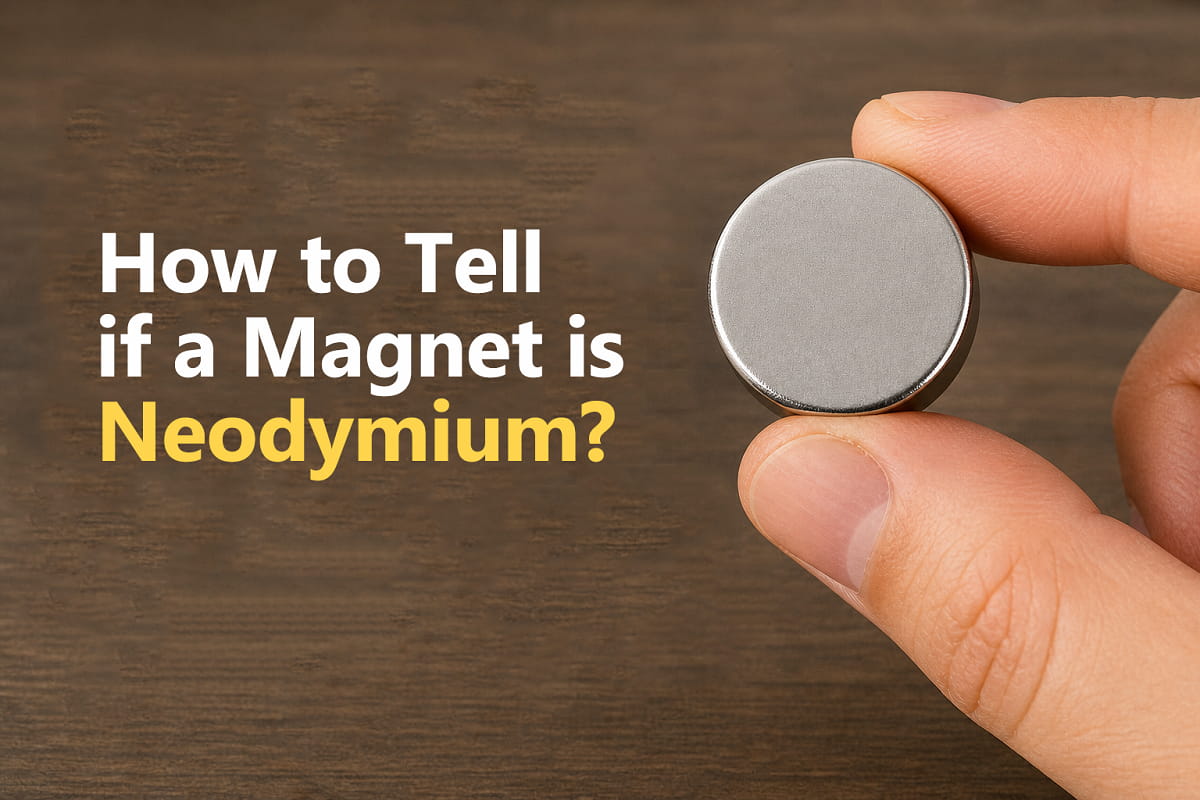
¿Alguna vez has tenido en la mano un discito plateado que parecía pesar diez veces más de lo que debería? Y cuando lo acercabas a la nevera, se rompió ¿Lo has encajado con tanta fuerza que casi te has pillado los dedos?
Sí. Probablemente sea un imán de neodimio.
Pero no todos los imanes plateados y brillantes son de neodimio. Y si compras imanes por Internet (sobre todo en plataformas como AliExpress o Amazon), es muy probable que te estén estafando.
Pues bien, Cómo saber si un imán es de neodimio ¿Sin un laboratorio sofisticado?
Eso es precisamente lo que te voy a enseñar en esta guía.
Como profesional fabricante de imanes de neodimio a medida, He probado personalmente cientos de imanes en los últimos años. Algunos eran auténticos. La mayoría eran falsos. Y he desarrollado unos cuantos métodos muy sencillos para distinguir los auténticos.
Vamos a ello.
¿Por qué es importante identificar los imanes de neodimio?
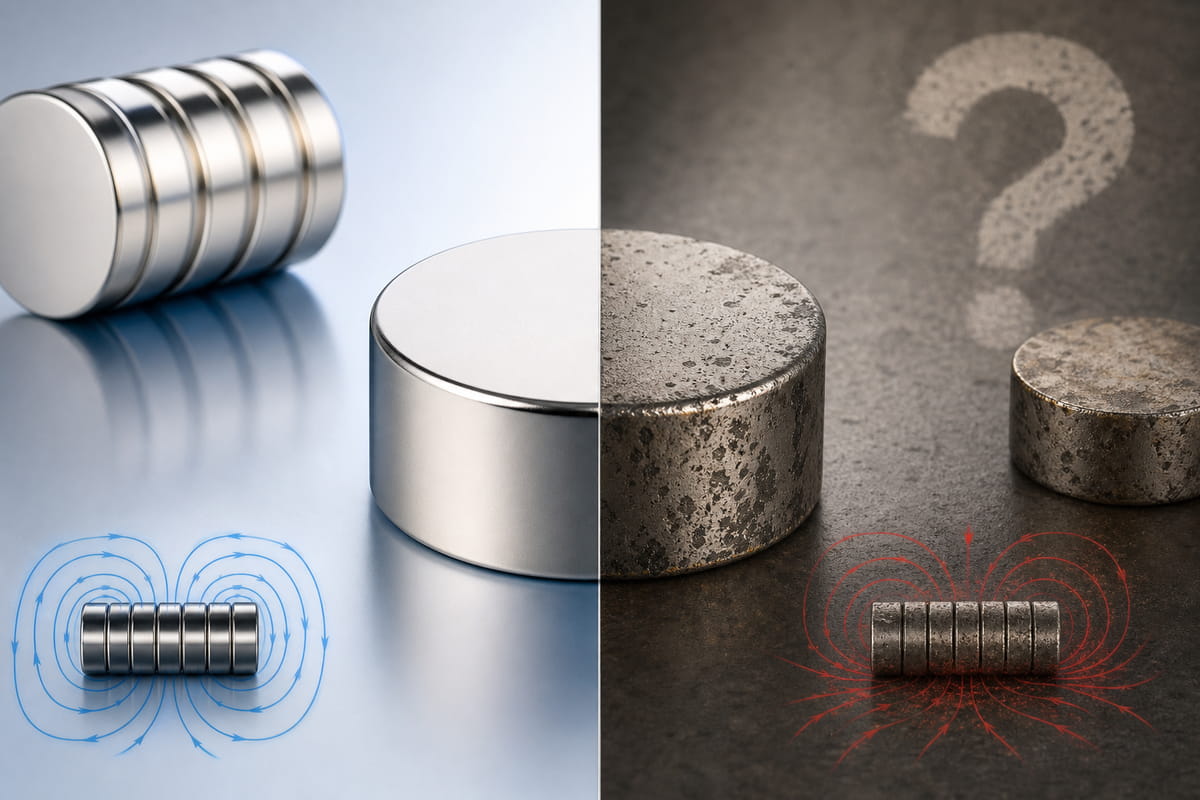
Los imanes de neodimio (también conocidos como NdFeB o imanes de tierras raras) son los imanes permanentes más potentes del planeta. Un imán de neodimio del tamaño de una moneda puede levantar varios libras de metal.
Además, su fabricación resulta cara. Por eso, a los vendedores poco fiables les encanta hacer pasar imanes más débiles (y más baratos) por imanes de neodimio de alta calidad.
De hecho, según mis propias pruebas, Más de 80% de imanes “N52” de AliExpress son, en realidad, de grado N35. – lo que supone una disminución de unos 50%.
Así que, si no sabes cómo distinguir lo que tienes entre las manos, probablemente estés pagando de más.
Vamos a arreglarlo.
¿Cómo saber si un imán es de neodimio?
Voy a dividirlo en cinco pruebas que puedes hacer en casa. No hace falta ningún equipo de laboratorio caro.
1. La prueba de fuerza (la más fiable)
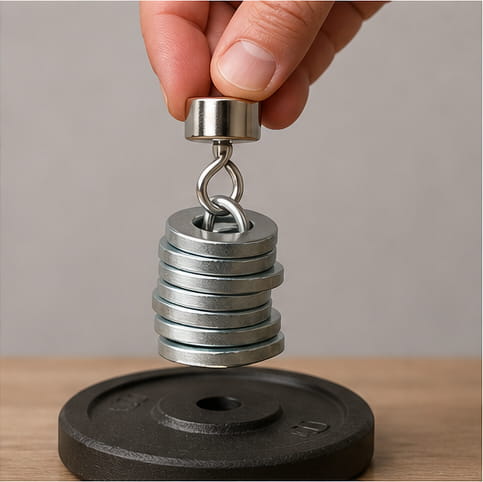
Este es mi método preferido.
Los imanes de neodimio son increíblemente fuerte teniendo en cuenta su tamaño. Un disco de 10 mm puede soportar más de 2 kg de acero. Intenta hacer lo mismo con un imán estándar de cerámica negra y verás que se cae enseguida.
Esto es lo que hay que hacer:
Coge tu imán y acércalo a una superficie de acero (la puerta de la nevera es ideal). Si es de neodimio, notarás una fuerte atracción desde al menos media pulgada de distancia.
Ahora intenta quitártelo de un tirón.
¿No puedes hacerlo sin resbalarte? Eso es buena señal.
Consejo de experto: Compáralo con un imán cerámico conocido del mismo tamaño. El imán de neodimio te parecerá entre 5 y 10 veces más potente. No estoy exagerando.
2. La prueba de la lámina
Hay algo de lo que la mayoría de la gente no se da cuenta:
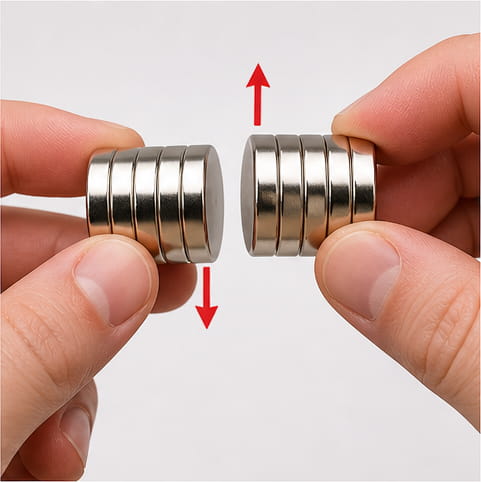
No se pueden separar dos imanes de neodimio tirando de ellos en línea recta.
En serio, pruébalo.
Si tienes dos imanes que se unen entre sí cuando se colocan uno frente al otro, intenta separarlos. ¿Se separan con facilidad? Probablemente no sean de neodimio.
Los imanes de neodimio auténticos son tan potentes que hay que diapositiva separarlos unos de otros. Esa es la única forma segura de separarlos.
¿En resumen? Si puedes unir dos imanes y separarlos tirando de ellos en línea recta sin que se deslicen, lo más probable es que sean imanes de ferrita estándar.
3. La prueba de apariencia
Hablemos de la apariencia.
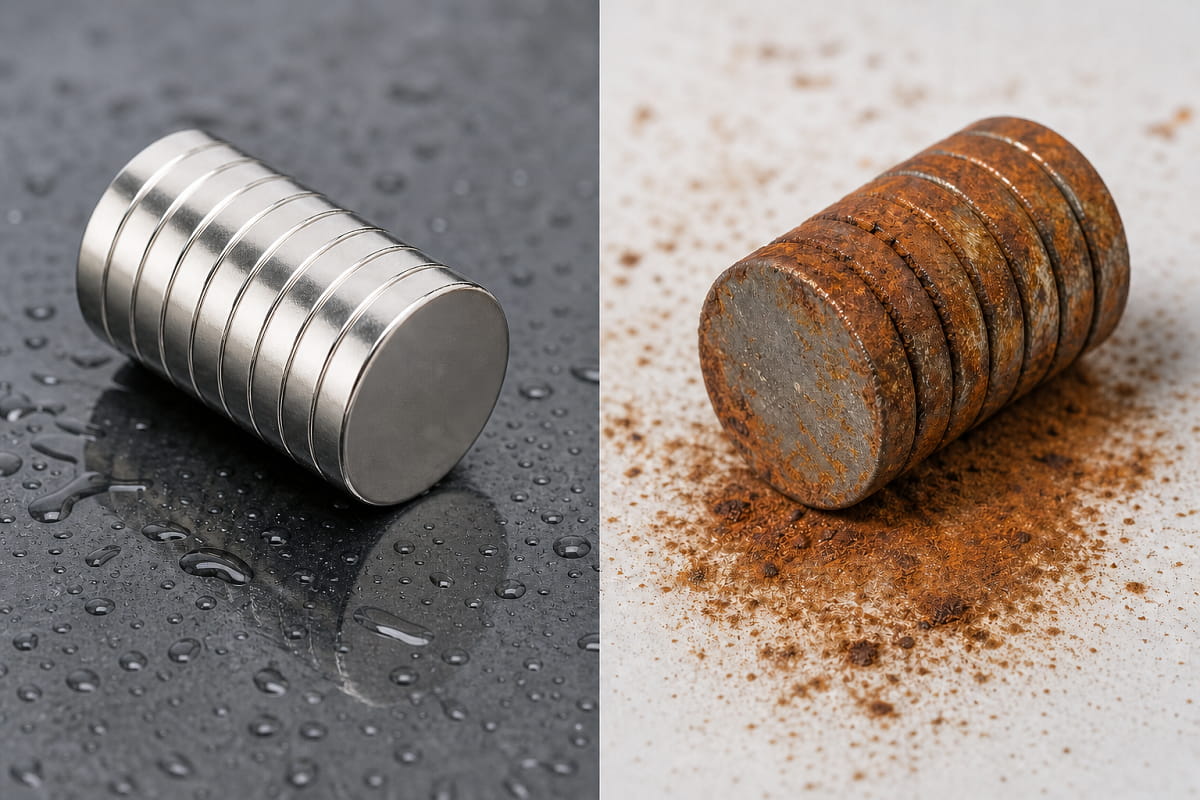
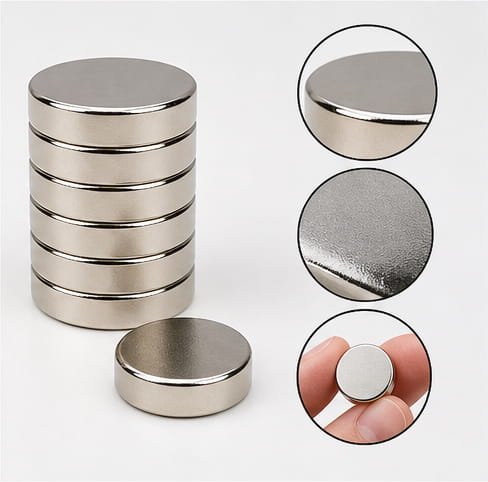
Los imanes de neodimio tienen una característica distintiva acabado metalizado blanco plateado. Pero aquí está el problema: en realidad son muy propensos a la corrosión.
Por eso los fabricantes casi siempre los recubren.
El recubrimiento más habitual es el de níquel-cobre-níquel (una triple capa). Esto les confiere ese aspecto brillante, reluciente, casi similar al del cromo.
Qué hay que tener en cuenta:
- Color: Plata brillante, no gris apagado
- Textura: Liso y denso: da la sensación de ser metal mecanizado de verdad
- Peso: Sorprendentemente pesados para su tamaño
Una salvedad: Algunos imanes de neodimio vienen con otros recubrimientos (oro, epoxi negro, zinc). Por eso, la apariencia por sí sola no basta. Pero, ¿y si parece un imán de cerámica negro barato? Sin duda, no es de neodimio.
4. El ensayo de fragilidad
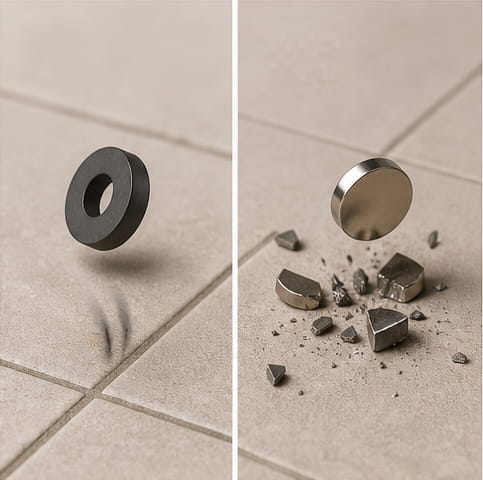
Esto es un poco peligroso, así que ten cuidado.
Los imanes de neodimio se fabrican utilizando un estructura cristalina sinterizada. Es una forma elegante de decir que son frágiles, como el cristal.
Si se te cae un imán de cerámica sobre baldosas, es posible que rebote. ¿Y si se te cae un imán de neodimio? Puede astillarse, agrietarse o incluso romperse en pedazos afilados.
Esta es una situación habitual:
Estás intentando separar dos imanes que se han pegado. De repente, se unen de golpe. Crack. Ahora tienes un imán roto y diminutos fragmentos afilados por todas partes.
En resumen: Si tu imán se astilla como el cristal en lugar de rebotar como la cerámica, es casi seguro que se trata de neodimio.
5. Ensayo con medidor de fuerza de tracción (en caso de litigio)
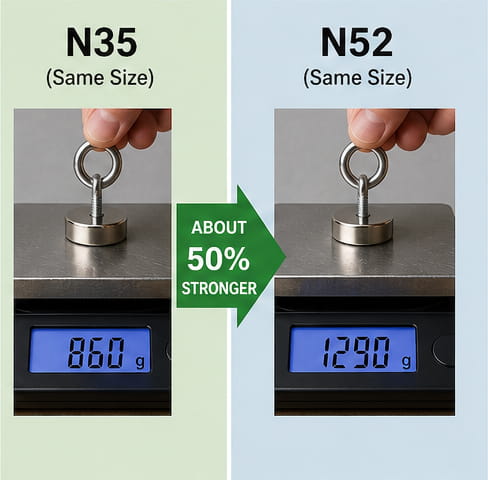
Vale, esto es para cuando quieras demostrar que un vendedor te ha vendido imanes falsos “N52”.
He construido un dispositivo sencillo utilizando un una balanza de cocina y una bandeja de acero. Me costó unos $20.
Así es como funciona:
- 1. Hazte con una báscula de cocina digital (la que mida en gramos vale perfectamente)
- 2. Coloca una placa de acero gruesa encima
- 3. Coloca el imán sobre la placa de acero
- 4. Tira del imán lentamente hacia arriba en línea recta y anota la lectura de peso máxima
Esto te indica la fuerza de atracción del imán.
Y ahora viene lo mejor:
Si tienes un imán N35 (el grado de neodimio más débil) del mismo tamaño, compara los valores. Un imán N52 auténtico debería tener aproximadamente 50% más resistente.
Según mis pruebas, los imanes falsos “N52” casi siempre coinciden exactamente con la fuerza de atracción de los N35. Así es como he ganado varias disputas en AliExpress.
¿Qué hay de los grados de los imanes? (N35 frente a N52)
Me hacen esta pregunta constantemente.
Los imanes de neodimio se clasifican en diferentes grados: N35, N38, N42, N45, N48, N50 y N52. El número indica la intensidad magnética. Cuanto mayor sea el número, más potente es el imán.
El N52 es el grado más alto disponible en el mercado. Es de aproximadamente El 50% es más resistente que el N35.
Pero aquí está el problema:
Los vendedores saben que “N52” suena impresionante. Por eso, no paran de poner esa etiqueta a los imanes N35.
Cómo saber si un imán es de neodimio ¿y comprobar también su calidad?
Utiliza el medidor de fuerza de atracción que acabo de describir. Mide la fuerza de atracción de tu imán. A continuación, compárala con las especificaciones publicadas para ese tamaño y grado.
¿Y si los números no coinciden? Te han timado.
Ejemplo real: mis pruebas en AliExpress
Permíteme compartir algunos datos de mi propio inventario de imanes.
He pedido un lote de imanes “N52” de 10 x 10 x 10 mm a AliExpress. Cuando las probé, la fuerza de tracción era de unos 1.900 gramos.
Después probé unos imanes N35 auténticos del mismo tamaño exactamente. ¿Fuerza de tracción? También rondaba los 1.900 gramos.
¿Una coincidencia? No.
Eso supone una diferencia de 50% respecto a lo que debería ofrecer el N52. Presenté una reclamación, aporté pruebas fotográficas y obtuve un reembolso parcial.
El vendedor ni siquiera protestó.
Consejo de experto: Comprueba siempre un lote en cuanto lo recibas. Incluso dentro de un mismo pedido, he visto cómo la fuerza de tracción variaba entre 60 g y más de 180 g. Eso supone una diferencia de tres veces. Eso no ocurre cuando la fabricación es de calidad.
Mitos comunes sobre los imanes de neodimio
Permíteme aclarar algunas cosas que oigo constantemente.
“Los imanes de neodimio pierden potencia con el paso del tiempo”
Eso no es cierto. Los imanes de tierras raras tienen una excelente resistencia a la desmagnetización. No pierden su fuerza ni al estar cerca de otros imanes ni al caerse al suelo.
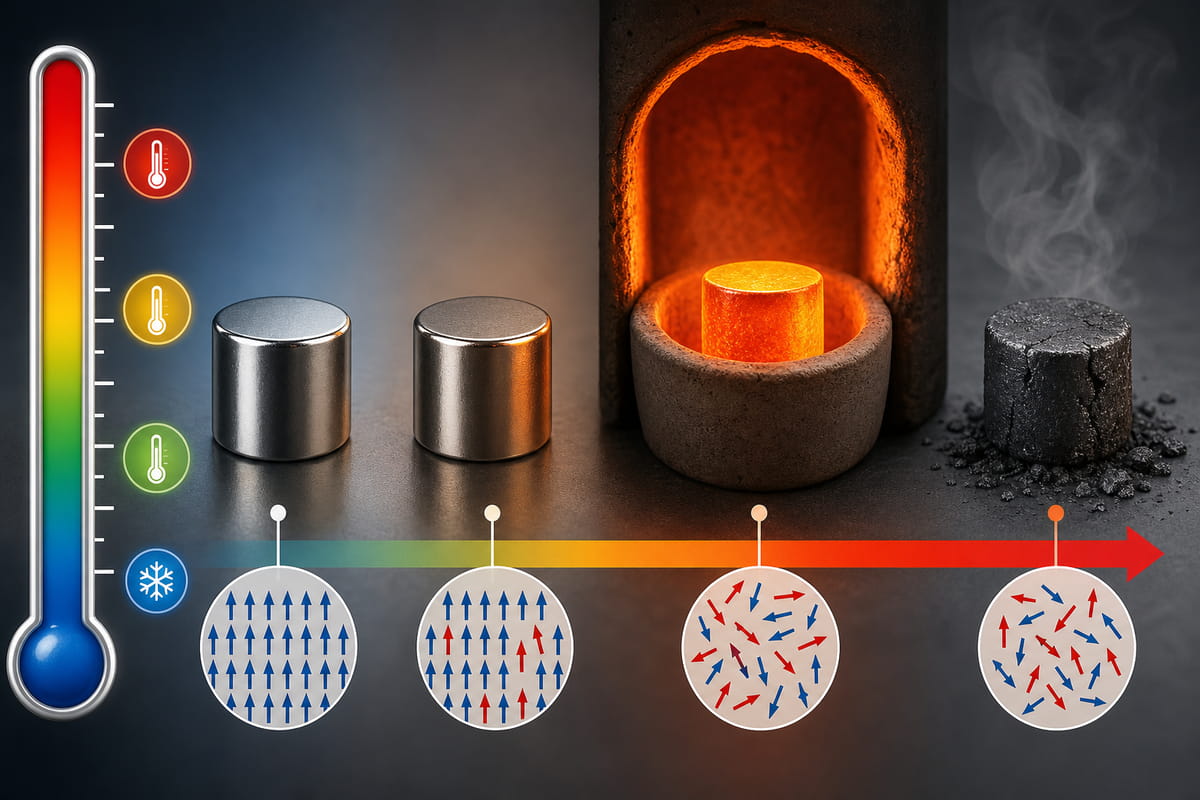
Sin embargo – El calor es el enemigo. El neodimio estándar de grado N empieza a perder fuerza a partir de los 176 °F (80 °C). ¿Y a partir de los 590 °F (310 °C)? Se desmagnetizan por completo.
“Todos los imanes de neodimio son iguales”
Desde luego que no. La calidad de fabricación varía enormemente. Un proceso de sinterización descuidado da lugar a una mala alineación magnética y a imanes más débiles, incluso si la composición química es idéntica.
Por eso, dos imanes “N52” de distintos vendedores pueden tener un rendimiento totalmente diferente.
“Los imanes de neodimio se pueden mecanizar fácilmente”
No. Ni hablar.
El neodimio es frágil y se astilla con facilidad. El mecanizado genera calor, lo que puede desmagnetizar el material. ¿Y si se calienta demasiado? El polvo es tóxico.
En resumen: No mecanices los imanes de neodimio. Compra el tamaño que necesites.
Dónde comprar imanes de neodimio auténticos
Basándome en mi experiencia, esto es lo que recomiendo:
Fuentes fiables:
- K&J Magnetics (con sede en EE. UU., excelente calidad)
- Imanes Osenc (Con sede en China, cantidad mínima de pedido flexible)
- Imanes de aplicación práctica
- TotalElement
Ten mucho cuidado con:
- AliExpress (se supone que todo cuesta N35, salvo que se demuestre lo contrario)
- Vendedores externos aleatorios de Amazon
- Ofertas de eBay que parecen demasiado buenas
Mi regla general: Si el precio es 50% más bajo que el de los demás, es probable que la calificación también sea 50% más baja.
Lista de comprobación de referencia rápida
Aquí tienes un resumen que te ayudará a responder Cómo saber si un imán es de neodimio en menos de 60 segundos:
| Prueba | Qué hay que tener en cuenta |
|---|---|
| Fuerza | Extremadamente resistente para su tamaño (entre 5 y 10 veces más que la cerámica) |
| Diapositiva | No se pueden separar cara a cara; hay que deslizarlas. |
| Apariencia | Plata brillante, aspecto mecanizado, sorprendentemente pesado |
| Fragilidad | Se astilla o se rompe en mil pedazos como el cristal al caer |
| Fuerza de tracción | Cumple con las especificaciones correspondientes a su tamaño y calidad |
Conclusión
Así que ahora ya sabes exactamente Cómo saber si un imán es de neodimio.
Permíteme resumir los puntos clave:
1. Haz primero la prueba de resistencia – Si no es notablemente más potente que un imán cerámico del mismo tamaño, no es de neodimio.
2. Realiza la prueba de la lámina – Los imanes de neodimio auténticos hay que deslizarlos para separarlos.
3. Comprueba el aspecto – Fíjate en ese acabado plateado brillante, tallado a máquina.
4. Ten cuidado con la fragilidad – Las virutas de neodimio se parecen al cristal.
5. Construir un medidor de fuerza de tracción si quieres demostrar las discrepancias en las calificaciones y ganar las disputas.
Yo mismo he utilizado estos métodos para comprobar cientos de imanes. Funcionan. Y me han evitado pagar de más por imanes falsos “N52” más veces de las que puedo contar.
Ahora quiero saber qué opinas:
¿Alguna vez has comprado imanes por Internet que resultaron ser menos potentes de lo que anunciaban? ¿Qué pasó?