Resumen rápido
Guarda los imanes de neodimio en un lugar fresco y seco (entre 50 y 85 °F, con una humedad inferior al 50%) y Utiliza siempre separadores como el plástico o la madera, para evitar que choquen entre sí. Guárdalos en recipientes cerrados y no metálicos, lejos de aparatos electrónicos, tarjetas de crédito y dispositivos médicos. No dejes nunca que los niños se acerquen a ellos y utiliza siempre gafas de seguridad cuando manipules imanes de gran tamaño.
¿Alguna vez te ha pasado que dos imanes de neodimio se hayan unido de golpe a una distancia de seis pulgadas? Si no sabes cómo guardarlos correctamente, te estás buscando problemas.
En esta guía, como profesional especializado en fabricante de imanes de neodimio, Voy a explicarte paso a paso cómo guardar los imanes de neodimio de forma segura. Estos consejos prácticos te ayudarán a mantener la potencia de tus imanes… y tus dedos a salvo.
¿Por qué es importante prestar atención al almacenamiento de los imanes de neodimio?
Un imán de neodimio que no se haya almacenado correctamente puede:
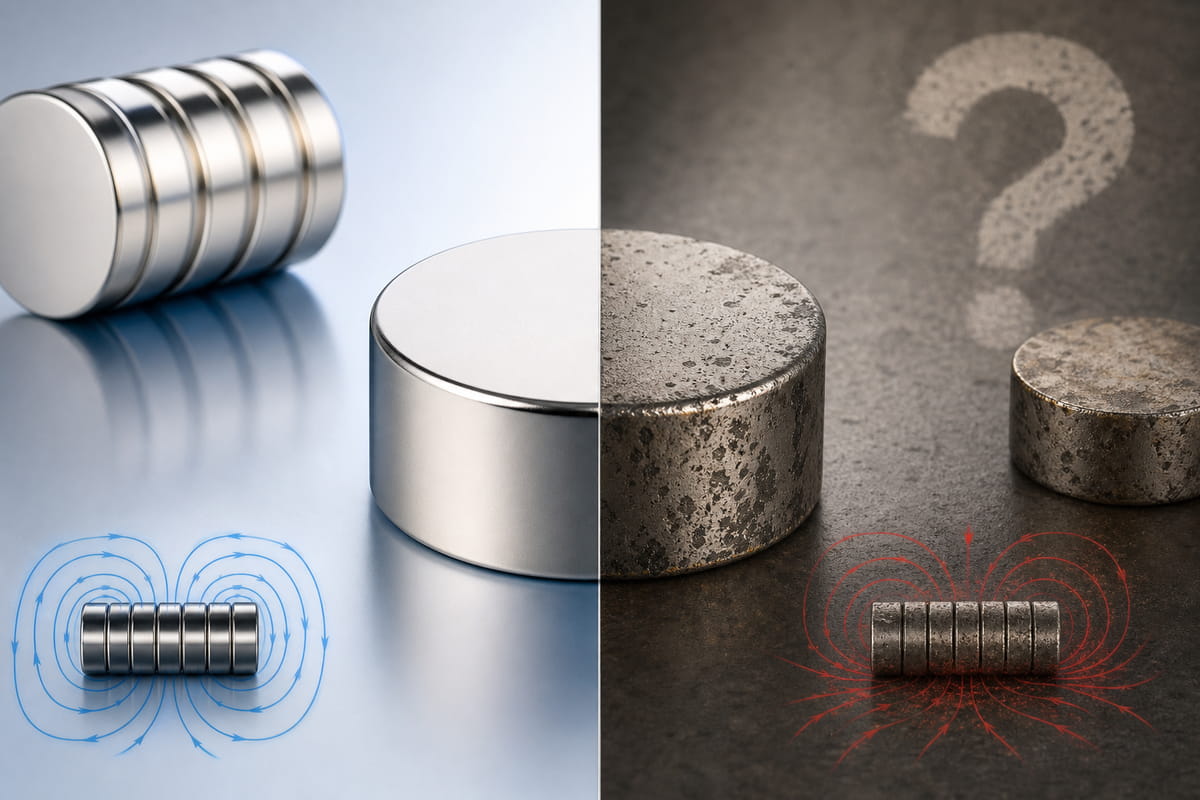
- Pierde hasta 5% de su resistencia al año en un entorno inadecuado
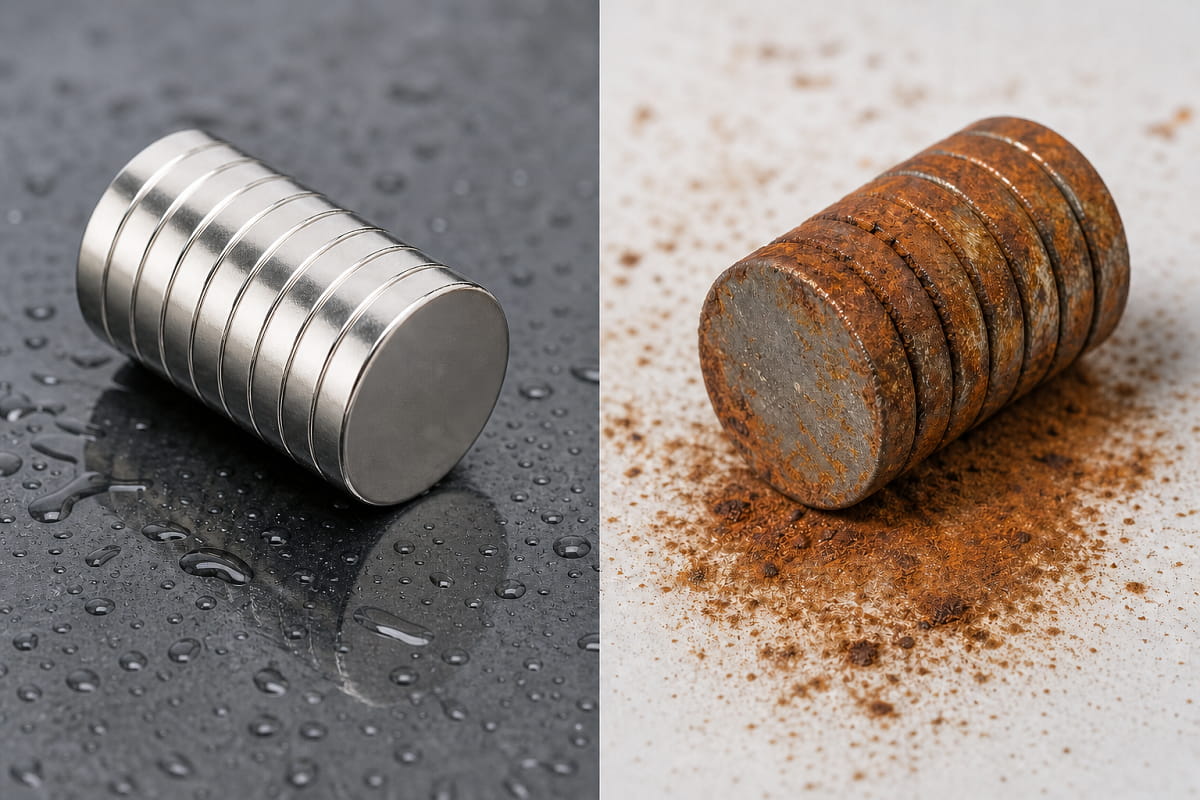
- Se oxida hasta convertirse en una masa desmenuzada si se expone a la humedad
- Hacerse añicos en fragmentos afilados que pueda volar a gran velocidad
- Aparatos electrónicos averiados desde varios pies de distancia
- Causar lesiones graves (hay gente que ha perdido dedos)
Si se almacenan correctamente, los imanes de neodimio conservarán más del 99% de su capacidad durante décadas.
Así es. Décadas.
Pues déjame enseñarte exactamente cómo conseguirlo.
Aspectos a tener en cuenta para el almacenamiento de imanes de neodimio
El peligro del #1: la fragilidad
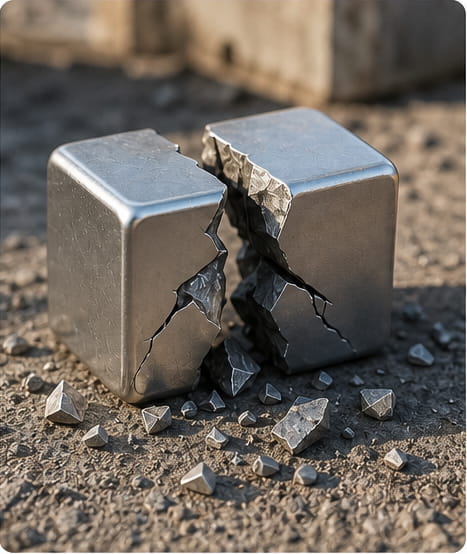
Hay algo de lo que la mayoría de la gente no se da cuenta: Los imanes de neodimio son FRÁGILES.
Están fabricados con un material de polvo sinterizado. Piensa en ellos como si fueran de cerámica o de cristal.
¿Qué ocurre cuando dos imanes se unen de golpe? Ese impacto puede provocar astillas, grietas o incluso que se rompan por completo.
¿Y si se rompen?
Esos fragmentos vuelan a GRAN velocidad. He visto cómo algunos pedazos recorrían más de 10 pies de un extremo a otro de una habitación.
Así que el primer paso para aprender a tienda de imanes de neodimio? No dejes que se golpeen entre sí.
Consejo de experto: Separa siempre los imanes deslizándolos lateralmente, en lugar de tirar de ellos directamente. Así se contrarresta su fuerza de atracción de forma controlada.
Factores ambientales: Temperatura
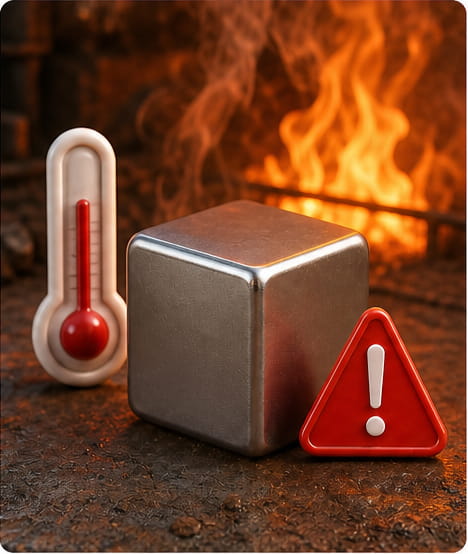
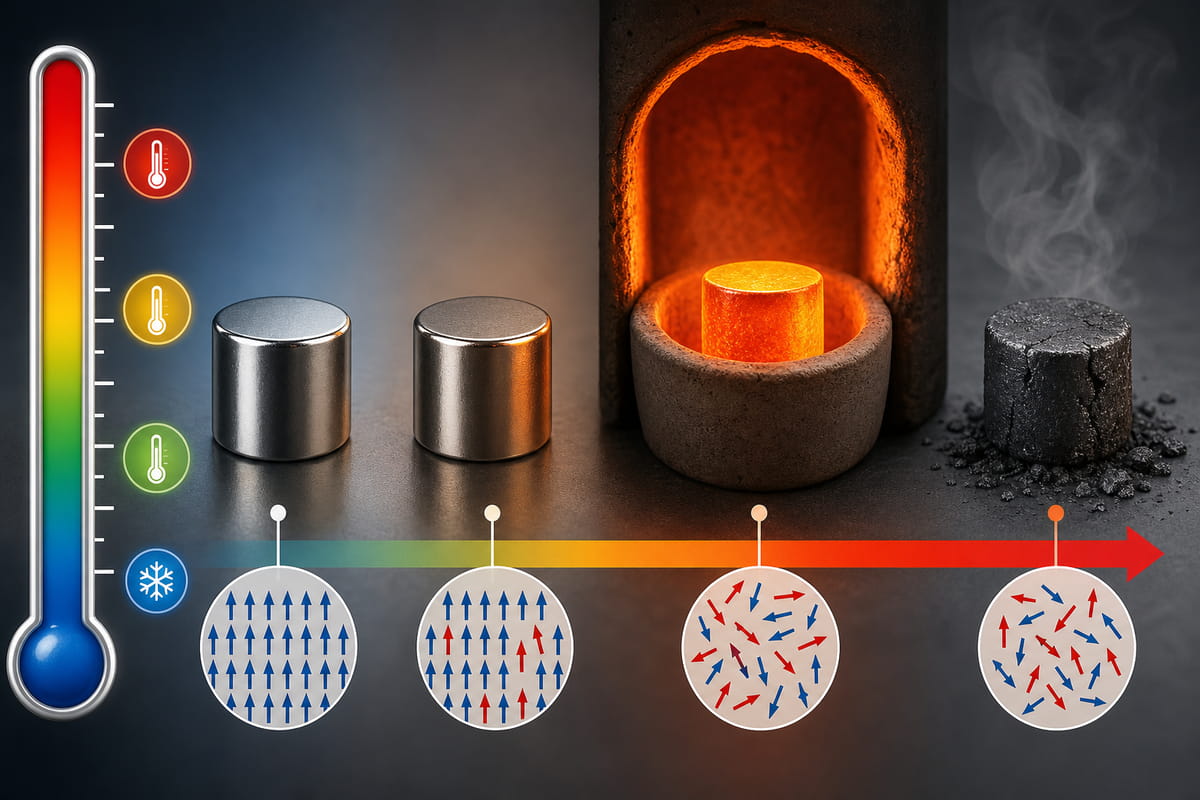
El calor reduce la fuerza magnética. Cada imán tiene lo que se conoce como “temperatura de Curie”, es decir, el punto en el que pierde de forma permanente sus propiedades magnéticas.
¿Para imanes de neodimio estándar? Eso son unos 176 °F (80 °C).
Pero esto es lo que la mayoría de las guías no te cuentan:
No es necesario alcanzar la temperatura de Curie para que se produzcan daños. Incluso una exposición prolongada a 140 °F puede provocar un debilitamiento gradual con el paso del tiempo.
Entonces, ¿dónde deberías no ¿Dónde los guardo?
- El maletero de tu coche en verano (las temperaturas pueden superar los 150 °F)
- Cerca de radiadores o rejillas de calefacción
- Bajo la luz directa del sol que entra por una ventana
- En un ático (sobre todo en verano)
El punto óptimo
Guarda tus imanes entre 50 °F y 85 °F (de 10 °C a 30 °C).
La temperatura ambiente (entre 68 y 72 °F) es perfecta.
Por lo general, las bajas temperaturas no dañan a los imanes de neodimio. Sin embargo, los cambios bruscos de temperatura pueden hacer que se vuelvan MÁS frágiles. Por eso, no los saques de una casa cálida para meterlos en un garaje helado.
Humedad y humedad: el asesino silencioso
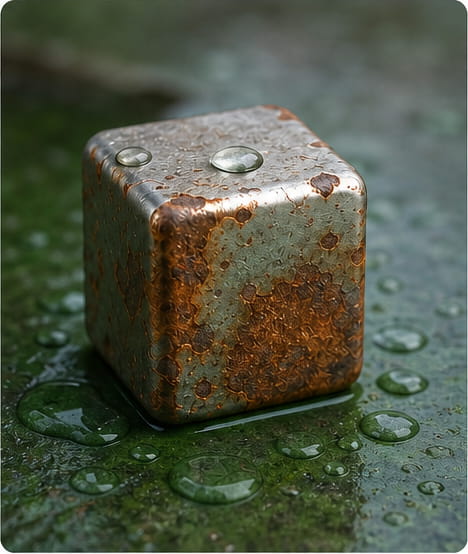
Esto es algo que me sorprendió cuando empecé a utilizar imanes de neodimio:
Se oxidan. Y mucho.
Los imanes de neodimio contienen entre un 60 y un 70% de hierro. Hierro + humedad = óxido.
Y el óxido no solo afea el aspecto. También debilita físicamente la estructura del imán. Con el tiempo, los imanes oxidados pueden, literalmente, desmoronarse.
La mayoría de los imanes de neodimio vienen con un recubrimiento protector (níquel, zinc o epoxi). Pero ese recubrimiento es DELGADO: normalmente solo mide entre 10 y 30 micras.
¿Un arañazo? ¿Una mella? La humedad se cuela por ahí.
Directrices sobre la humedad
| Nivel de humedad | Nivel de riesgo | Qué hacer |
|---|---|---|
| Por debajo de 50% | Seguro | Obras de almacenamiento estándar |
| 50-60% | Moderado | Utiliza bolsitas desecantes |
| Por encima de 60% | Alto | Trasládate a una zona con climatización |
Mi configuración de almacenamiento
Esto es lo que yo utilizo personalmente para el almacenamiento a largo plazo:
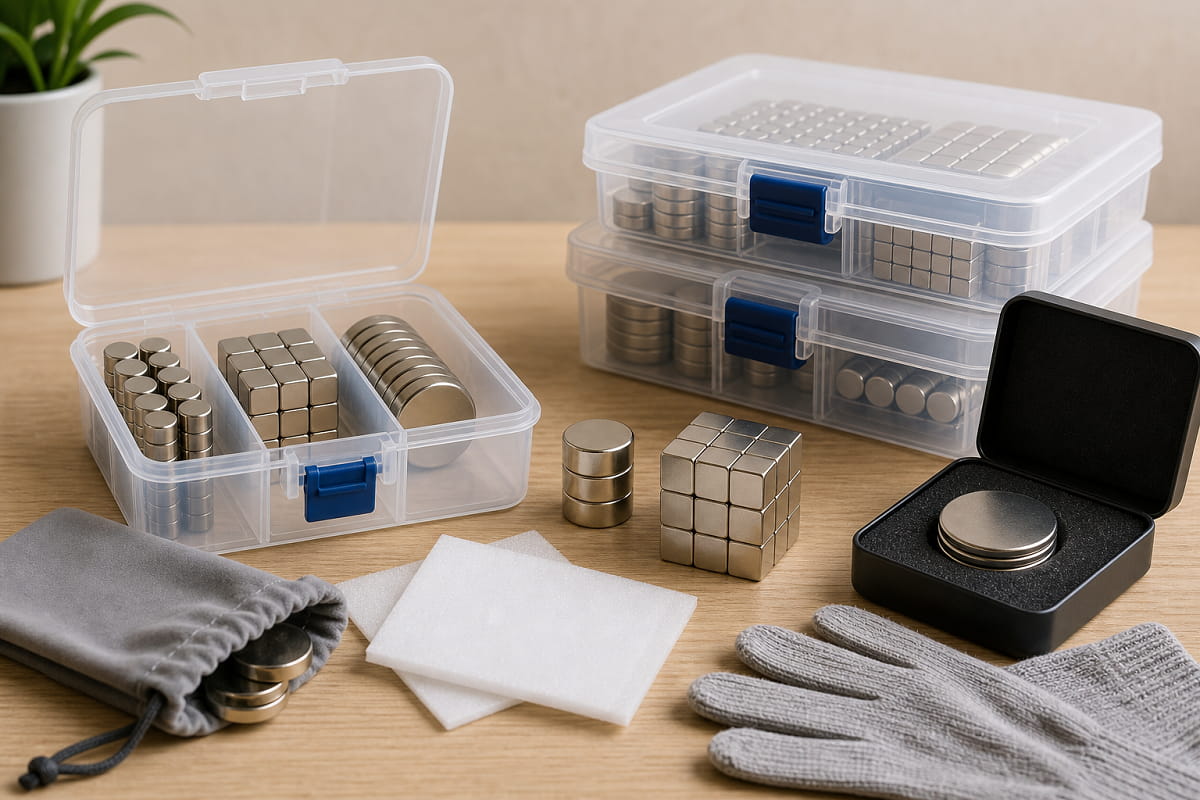
- 1. Envases de plástico herméticos con juntas de goma
- 2. Sobres de gel de sílice (Los cambio cada tres meses)
- 3. Papel VCI (Inhibidor de corrosión volátil) envuelto alrededor de los imanes
¿Cuánto cuesta? Unos $15-20 por todo.
¿Y si vives en una zona húmeda? No te olvides de los sobres desecantes. Son un seguro barato.
Consejo de experto: Antes de guardar los imanes, asegúrate de que estén COMPLETAMENTE secos. Incluso una gotita de agua puede provocar manchas de óxido.
Cómo almacenar los imanes de neodimio
Almacenamiento físico: la forma correcta de separar imanes
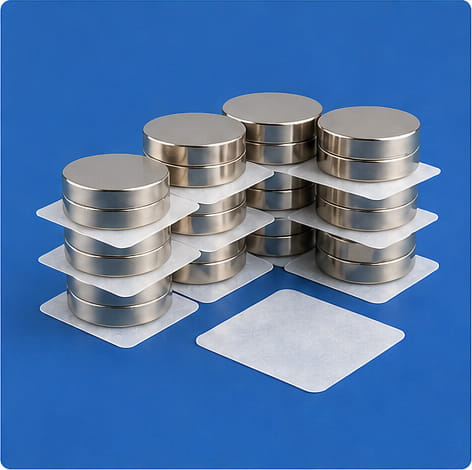
Vale, déjame explicarte el aspecto físico de Cómo guardar los imanes de neodimio.
Usa separadores (en serio, usa separadores)
Esto no es negociable.
Necesitas algo que coloques entre los imanes apilados para evitar que se unan.
Buenos materiales para espaciadores:
- Plástico grueso (1/4 de pulgada o más)
- Madera (los palitos de helado sirven para los imanes pequeños)
- Cartón (varias capas para que los imanes sean más potentes)
- Relleno de espuma
¿Qué grosor deben tener los espaciadores?
Esta es una regla sencilla que suelo seguir:
| Tamaño del imán | Espesor mínimo del espaciador |
|---|---|
| Menos de 1 pulgada | 1/4 de pulgada |
| 1-2 pulgadas | 1/2 pulgada |
| Más de 2 pulgadas | 1 pulgada |
Y utiliza siempre materiales no magnéticos. Los separadores de acero o hierro van en contra del objetivo.
La “zona libre de metales”
Los imanes de neodimio pueden “saltar” desde distancias sorprendentemente largas. Un imán del tamaño de una moneda puede saltar varias pulgadas hasta un trozo de hierro. ¿Y los más grandes? Pueden desplazarse entre 2 y 3 pies.
Así que este es mi consejo:
Mantén una “zona libre de metales” bien definida alrededor de los imanes que tengas guardados.
Eso significa que:
- No hay herramientas en un radio de 2 pies
- No se permiten estanterías metálicas (utiliza madera o plástico)
- No debe haber otros imanes demasiado cerca
Contenedores de almacenamiento: qué funciona (y qué no)
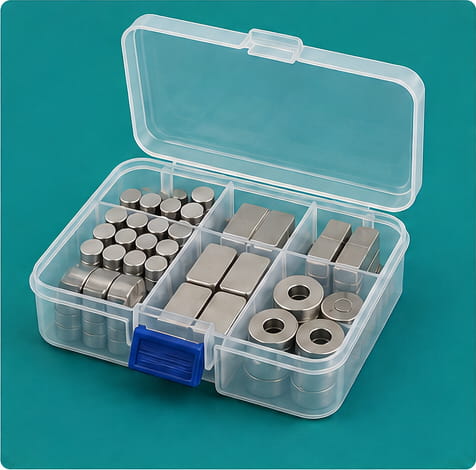
A lo largo de los años he probado un montón de opciones de almacenamiento. Esto es lo que recomiendo:
Las mejores opciones
- Estuches rígidos acolchados Estas son mis favoritas. Las fundas magnéticas para la pesca o las fundas rígidas con revestimiento de espuma protegen tanto contra los golpes como contra la atracción magnética.
- Cajas de madera La madera actúa como barrera natural. No se producen atracciones magnéticas no deseadas. Además, da una sensación de limpieza y orden.
- Cajas de plástico para aparejos Es ideal para imanes pequeños. Solo hay que asegurarse de que los separadores sean lo suficientemente gruesos.
- Cajas de munición con separadores de espuma Ideal para imanes de mayor tamaño. La caja metálica también ofrece cierto blindaje magnético.
Qué hay que evitar
- Solo cajas de cartón — Los imanes potentes pueden atravesar
- Bolsas de plástico finas — Sin protección contra impactos
- Envases metálicos sin revestimiento — Los imanes se pegarán a los laterales
La técnica “flotante”
Aquí tienes un truco genial que he aprendido:
Guarda los imanes en una caja que sea un poco más grande de lo necesario. Fíjalos en el centro con espuma o material de relleno.
¿Por qué?
El el campo magnético disminuye exponencialmente con la distancia. Incluso una pulgada más de espacio libre reduce drásticamente el riesgo de atraer objetos metálicos cercanos.
¿Papel de periódico arrugado? No lo utilices. Los imanes potentes pueden comprimir el papel de periódico con el tiempo, haciendo que se acerque más a las paredes de la caja.
SOPORTES: No se necesitan imanes de neodimio
Esta es una pregunta que me hacen a menudo.
Breve lección de historia:
Los imanes más antiguos (como los de alnico) necesitaban “mantenedores”, unas barras metálicas que unían los polos para evitar la desmagnetización.
Pero ¿Imanes de neodimio? No necesitan retenedores.
Mantendrán su resistencia tanto si se apilan como si se almacenan por separado.
Dicho esto…
El uso de un pasador de acero puede ser de ayuda contener el campo magnético y hacer que el almacenamiento sea más seguro. No mantendrá la intensidad del imán (que ya está al máximo), pero sí puede reducir la “zona de peligro” alrededor de los imanes almacenados.
¿Es necesario, entonces? No. ¿Es útil? A veces, sobre todo con imanes más grandes.
Cómo apilar imanes: la forma correcta

Hay algo que mucha gente entiende mal:
Apilar imanes es, de hecho, BUENO para ellos, siempre y cuando se haga correctamente.
Cuando apilas imanes con polos opuestos situados uno frente al otro (de norte a sur), se crea un “circuito magnético cerrado”. Esto reduce el campo externo y mantiene los imanes estables.
La forma correcta de apilar:
- 1. Uso separadores entre cada imán (a mí me gustan las láminas finas de plástico)
- 2. Asegúrate de que se sientan totalmente atraídos, y no repelidos
- 3. En el caso de los imanes de anillo, plantéate utilizar una varilla de acero que pase por el centro
- 4. Etiqueta la pila para saber cuál es el extremo norte
La forma incorrecta:
No las amontones sin más. Así es como se producen las astillas y las grietas.
Sepáralos por tipo: no mezcles los imanes
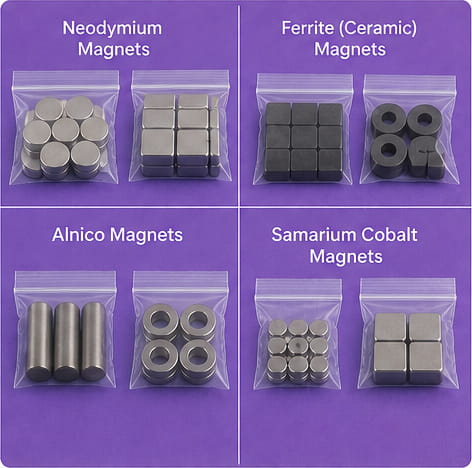
Hay algo que las empresas de imanes no siempre te cuentan:
Los imanes más potentes pueden desmagnetizar los más débiles con el tiempo.
Por lo tanto, nunca guardes imanes de neodimio en contacto directo con:
- Imanes de ferrita (cerámicos)
- Imanes de alnico
- Imanes de samario-cobalto (aunque estos son más resistentes)
Guárdalos en recipientes separados. O, al menos, separados por separadores gruesos.
Lo aprendí por las malas. Guardé unos imanes de neodimio N52 junto a una pila de imanes de ferrita viejos. ¿Seis meses después? Los de ferrita habían perdido unos 15% de su fuerza.
Electrónica y dispositivos médicos: la distancia importa

Los imanes de neodimio pueden estropear tus costosos aparatos electrónicos. No estoy exagerando.
Esto es lo que debes evitar:
- Portátiles y ordenadores (mínimo de 2-3 pies)
- Discos duros (más de 3 pies para imanes potentes)
- Tarjetas de crédito con banda magnética (manténlas bien lejos)
- Teléfonos inteligentes y tabletas
- Relojes inteligentes
- Marcapasos y bombas de insulina (6+ pulgadas como MÍNIMO, aunque es más seguro que sean varios pies)
¿Y qué hay de la distancia?
La distancia de seguridad depende de la intensidad del imán.
En el caso de un imán cúbico estándar N35 de 1 pulgada, manténlo a una distancia mínima de 1-2 pies de los aparatos electrónicos sensibles.
¿Para imanes N52? Duplica esa cantidad.
En caso de duda, aumentar la distancia. El campo magnético disminuye rápidamente: sigue la ley del inverso del cubo. Eso significa que, al duplicar la distancia, la intensidad del campo se reduce en un 87,51 TP3T.
Así que incluso unas pocas pulgadas más marcan una gran diferencia.
Consejos de manejo: cómo mover imanes de forma segura
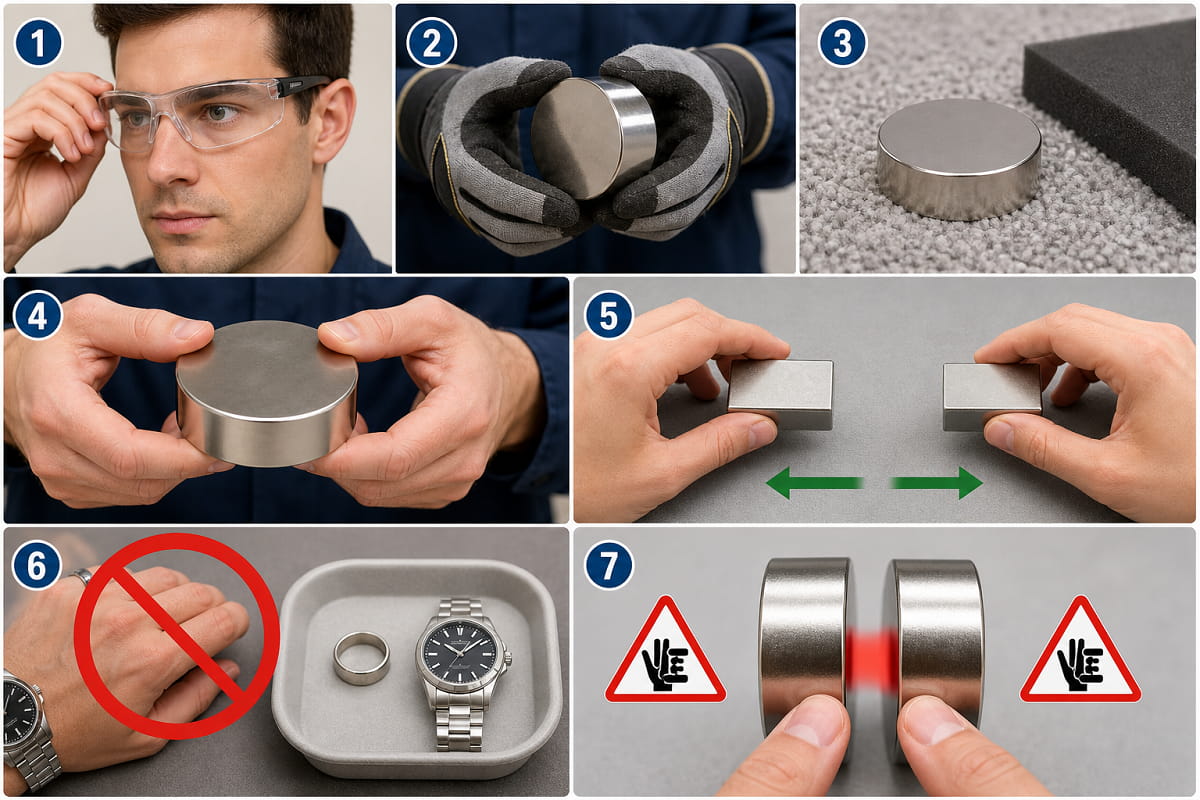
Antes incluso de llevarlas al trastero, tienes que manipularlas con cuidado.
Este es mi proceso paso a paso:
- Paso 1: Utiliza gafas de seguridad. SIEMPRE. Pueden salir disparados fragmentos.
- Paso 2: Para imanes de más de 1 pulgada, utiliza guantes de trabajo resistentes.
- Paso 3: Trabaja sobre una superficie blanda (moqueta o una almohadilla de espuma).
- Paso 4: Utiliza las dos manos para los imanes más grandes.
- Paso 5: Separa los imanes deslizándolos; no tires de ellos directamente.
- Paso 6: Quítate todas las joyas (los anillos y los relojes pueden romperse).
- Paso 7: No pongas los dedos en la “zona de aprisionamiento” (el espacio entre dos imanes que se atraen).
Sé que esto puede parecer una exageración. Pero he visto las consecuencias de un accidente con imanes. No es nada agradable.
Seguridad infantil: esto no es negociable

Mantén los imanes de neodimio FUERA DEL ALCANCE DE LOS NIÑOS. ¿Y si un niño se traga un imán? Eso es peligroso.
¿Y si se tragan DOS? Los imanes pueden atraerse entre sí a través de las paredes intestinales. Esto provoca perforaciones, hemorragias internas y requiere una intervención quirúrgica de urgencia.
Decenas de niños han tenido que ser operados tras tragarse imanes de gran potencia.
Así que este es mi consejo:
- Guarda los imanes en recipientes cerrados con llave
- Guárdalos en estantes altos (fuera del alcance)
- Nunca los trates como juguetes, ni siquiera los imanes esféricos pequeños.
- Cuenta los imanes antes y después de usarlos
Referencia rápida: Mi lista de verificación para el almacenamiento magnético
Aquí tienes todo lo que debes recordar sobre Cómo guardar los imanes de neodimio:
| Factor | Qué hacer |
|---|---|
| Temperatura | Mantener a una temperatura de entre 50 y 85 °F |
| Humedad | Por debajo de 50% (utilizar gel de sílice) |
| Separadores | Utiliza plástico, madera o cartón |
| Contenedor | No metálico, sellado, acolchado |
| Apilamiento | Polos opuestos que se enfrentan entre sí |
| Porteros | No es obligatorio (pero puede ser útil) |
| Electrónica | Una distancia mínima de 2-3 pies |
| Niños | Solo almacenamiento bajo llave |
| Manejo | Utiliza gafas de seguridad y guantes |
Cómo almacenar imanes de neodimio a largo plazo
Permíteme terminar con un consejo general.
Si vas a guardar imanes durante meses o años (no solo entre un proyecto y otro), esto es lo que te recomiendo:
- Utiliza recipientes herméticos con juntas de goma
- Añadir papel VCI (Inhibidor de corrosión volátil)
- Incluir sobres desecantes que cambian de color (para que sepas cuándo están saturados)
- Almacenar en zonas con temperatura controlada (sin garajes ni cobertizos)
- Etiqueta todo — incluir advertencias sobre la resistencia para los futuros usuarios
- Revisar cada 3-6 meses para detectar signos de óxido o daños
Tengo imanes que llevan más de 5 años guardados así. Todavía conservan el 99%+ de su fuerza original.
¿En resumen?
Cómo almacenar correctamente los imanes de neodimio No es complicado. Pero sí requiere prestar atención a los detalles.
Mantenlos frescos. Mantenlos secos. Mantenlos separados.
Si sigues estos tres consejos, tus imanes mantendrán su fuerza y seguirán siendo seguros durante décadas.
¿Ignoras estos principios? Te arriesgas a que se oxide, a que se rompan los imanes o, peor aún, a tener que ir a urgencias.
La decisión es tuya.
Ahora ve a guardar esos imanes como es debido. Tu yo del futuro te lo agradecerá.