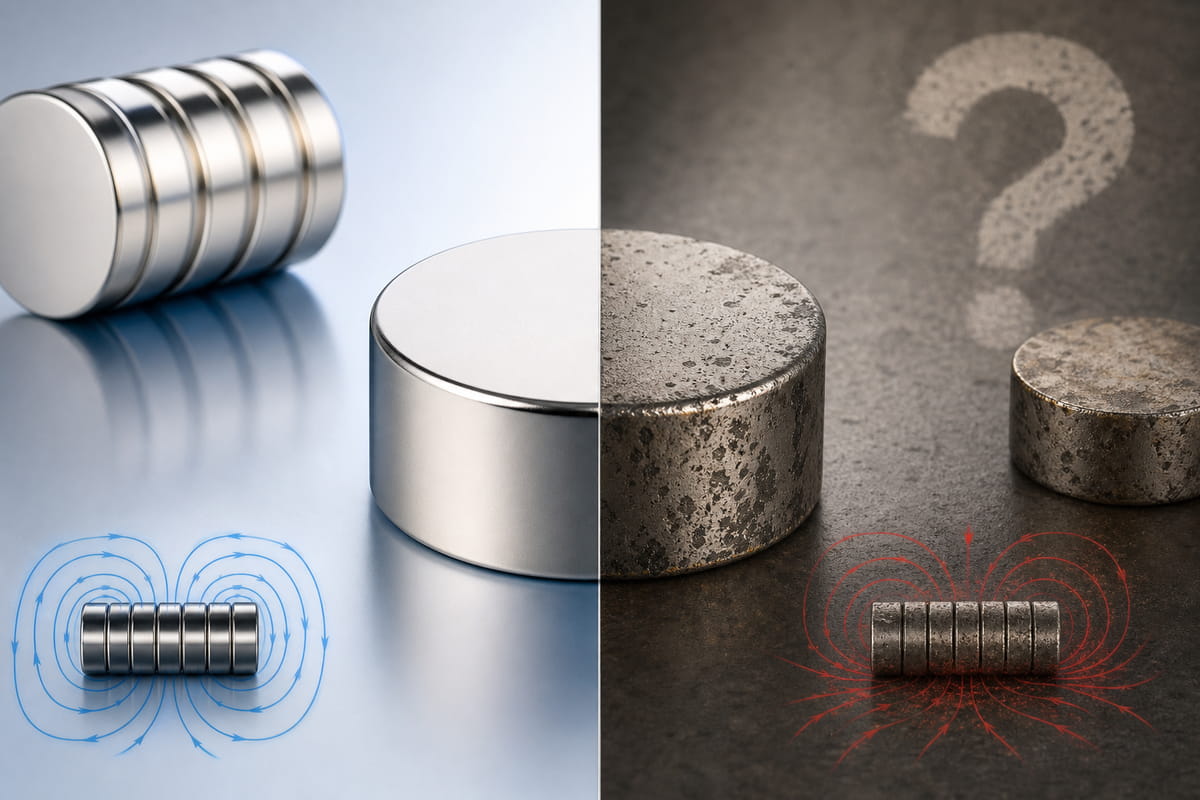
Resumen rápido
Taladrar un imán de neodimio por tu cuenta es peligroso porque el material es frágil (puede romperse en mil pedazos), el calor anula el magnetismo de forma permanente y el polvo supone un grave riesgo de incendio. Los profesionales utilizan herramientas con punta de diamante, refrigeración constante con agua y desmagnetizan primero la pieza en bruto; no es un trabajo para aficionados al bricolaje.
En lugar de taladrar, compra imanes anulares ya taladrados o imanes con cabeza avellanada, o utiliza adhesivos fuertes como el cianoacrilato o el epoxi.
Cuando tienes un imán de neodimio sobre tu banco de trabajo. Es perfecto para tu proyecto… salvo por un pequeño problema. No tiene agujero. Y tú de verdad Hay que atornillarlo.
Así que te preguntas: ¿Se puede taladrar un agujero en un imán de neodimio?
¿Técnicamente? Sí, tú puede Taladrar un agujero en un imán de neodimio. Pero, ¿deberías hacerlo? Para nada.
De hecho, te recomiendo encarecidamente que ni se te ocurra intentarlo por tu cuenta. Y cuando hayas leído esta guía, entenderás perfectamente por qué.
Verás, los imanes de neodimio (también llamados imanes de tierras raras) no son como los metales normales. Se comportan más bien como cerámico que el acero. Y cuando intentas perforar uno, las cosas pueden salir mal de verdad rápido.
Hoy, como profesional fabricante de imanes de neodimio a medida, voy a explicarlo paso a paso:
- Por qué es tan peligroso taladrar imanes de neodimio
- ¿Cómo se ve afectado el rendimiento del imán?
- El solo como lo hacen los profesionales (si no les queda más remedio)
- Una alternativa mucho más segura que la gente debería utilizar en lugar de la 99%
¿Te parece bien? Vamos a ello.
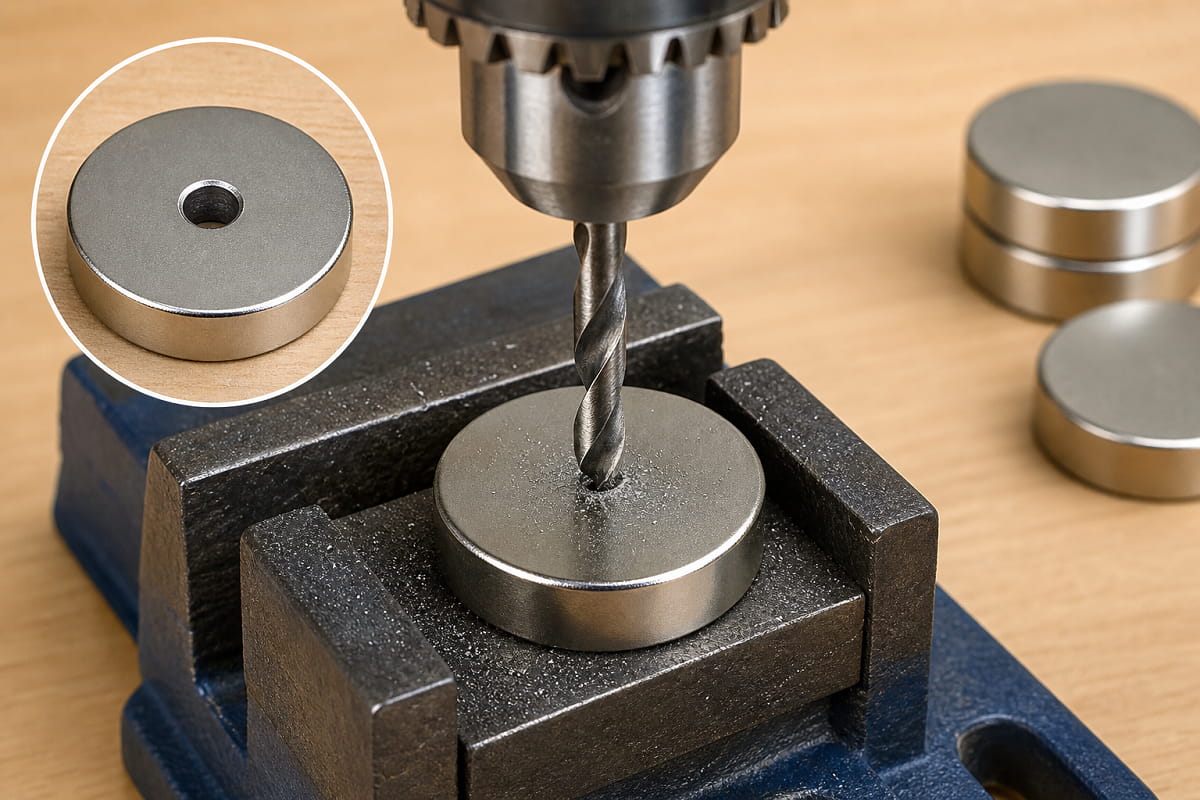
¿Se puede taladrar un agujero en un imán de neodimio?
La respuesta breve es sí – pero con una lista interminable de “si...”.”
Si tienes herramientas con punta de diamante, refrigeración continua por agua, y tú has desmagnetizado Primero el material… y luego, sí, es posible.
Los aficionados al bricolaje no funcionan así. Así es como fabricantes profesionales de imanes trabajo. E incluso ellos normalmente se taladran agujeros antes El imán está magnetizado.
Así que cuando alguien me pregunta:, “¿Se puede taladrar un agujero en un imán de neodimio?” Mi respuesta sincera es: “Tú puede. Pero de verdad, de verdad ”no debería».”
Déjame explicarte exactamente por qué.
Por qué NUNCA debes taladrar tú mismo un imán de neodimio
A lo largo de los años he visto un montón de proyectos de bricolaje. Y créeme cuando te digo esto: taladrar un imán de neodimio es una de las cosas más arriesgadas que puedes intentar en tu taller.
Aquí tienes cuatro razones de peso que lo explican.
1. El material es extremadamente frágil
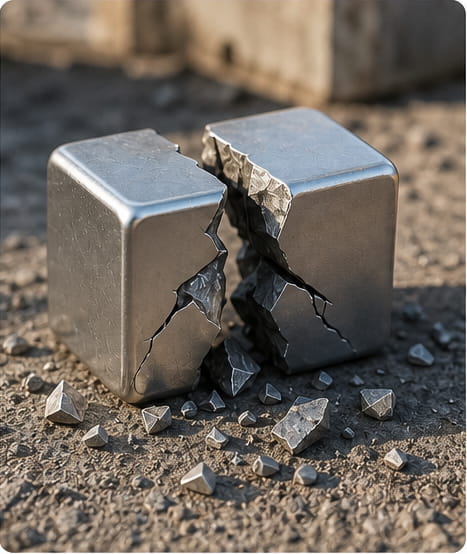
Los imanes de neodimio son sinterizado. Eso significa que están fabricados a partir de polvo metálico que se comprime y se calienta hasta convertirlo en un bloque sólido.
Piensa en ello como si fuera cerámica o cristal.
¿Si la broca se atasca o vibra aunque sea un poco? Crack. Y así, sin más, el imán se hace añicos en pedacitos minúsculos y afilados como cuchillas que salen disparados por toda la habitación.
He oído historias de lectores que lo han probado. Un chico me contó que su imán explotó “como una granada” cuando la broca se atascó.
No mola.
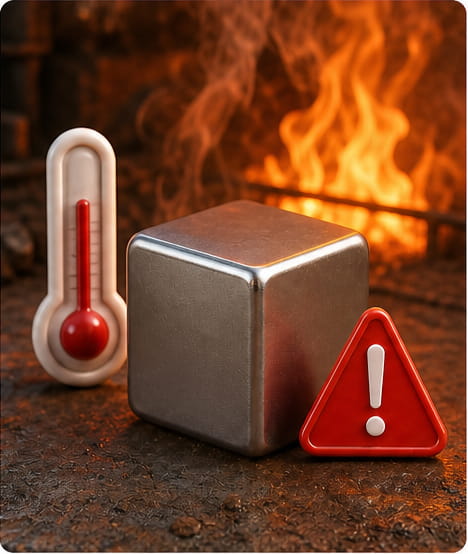
2. El calor acabará con su magnetismo
Hay algo de lo que mucha gente no se da cuenta:
Imanes de neodimio Odio el calor.
Su temperatura máxima de funcionamiento suele oscilar entre los 80 °C y los 150 °C (176 °F y 302 °F), dependiendo del tipo. Si se supera ese límite, se empieza a perder la fuerza magnética. de forma permanente.
La perforación genera mucho de fricción. Y la fricción equivale a calor.
A menos que utilices un flujo constante de refrigerante (algo que la mayoría de los aficionados al bricolaje no hacen), es probable que desmagnetices el imán antes incluso de terminar el agujero.
Así que, aunque tú... triunfar al perforarlo… ¡Enhorabuena! Ahora tienes un imán que apenas se pega a la nevera.
3. Grave riesgo de incendio (sí, de verdad)
Esto sorprende a la mayoría de la gente.
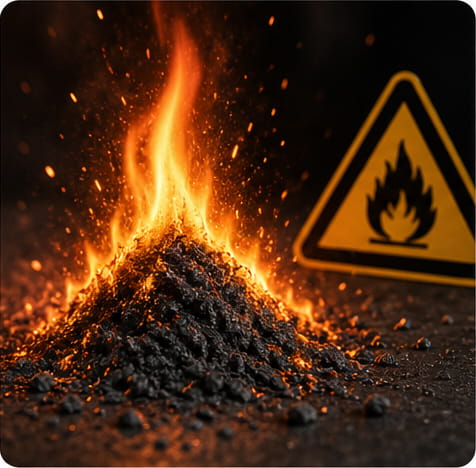
El polvo y los lodos que se generan al perforar el neodimio son altamente inflamable. Estamos hablando de un caso de “ignición espontánea”.
De hecho, un estudio sobre seguridad realizado en 2026 por la Asociación Nacional de Protección contra Incendios puso de relieve El polvo de neodimio supone un riesgo significativo de incendio en los talleres sin ventilación.
Si ese polvo entra en contacto con una chispa —ya sea del motor de tu taladro, una descarga estática o incluso simplemente por fricción—, puede encender.
¿Y una vez que empieza a arder? Arde con fuerza y rapidez.
No vale la pena correr el riesgo.
4. Se acabó la protección contra la corrosión
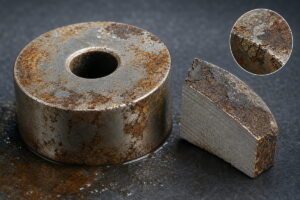
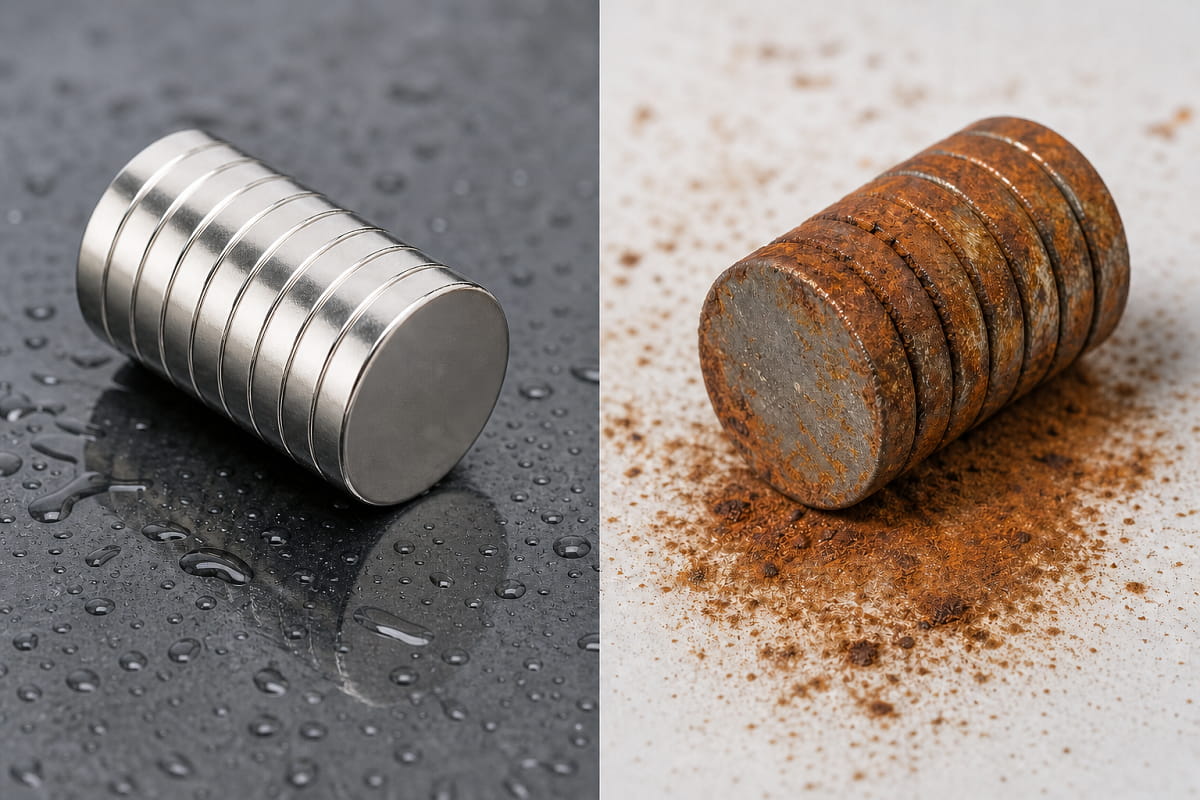
La mayoría de los imanes de neodimio vienen con un recubrimiento de níquel-cobre-níquel. ¿Esa capa plateada y brillante? Sirve para evitar que el imán se oxide.
Porque la cuestión es esta: el neodimio en bruto se oxida rápidamente. Si lo dejas expuesto al aire y a la humedad, empezará a desmoronarse hasta convertirse en polvo en cuestión de meses.
Al taladrar un agujero, se elimina esa capa protectora. Ahora queda neodimio desnudo y sin recubrimiento expuesto en el interior del agujero.
¿Y sabes qué? No es fácil volver a aplicar una capa de pintura solo en el interior de un agujero taladrado.
Así que tu imán se irá corroyendo poco a poco desde dentro hacia fuera.
Cómo taladran los profesionales los imanes de neodimio
Vale, supongamos que eres terco. Aún así, quieres saberlo cómo Se hace de forma profesional.
Lo respeto. Así que este es el proceso real:
Paso 1: Desmagnetizar primero
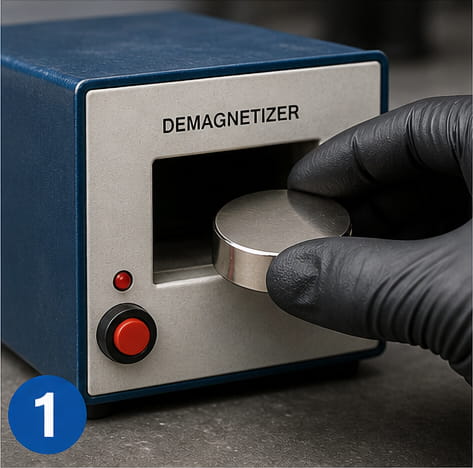
No es fácil taladrar un imán de neodimio magnetizado. El campo magnético interfiere con la herramienta y las virutas de metal se pegan por todas partes.
Los profesionales utilizan un desmagnetizador para eliminar el campo magnético antes del mecanizado.
Paso 2: Solo herramientas con punta de diamante
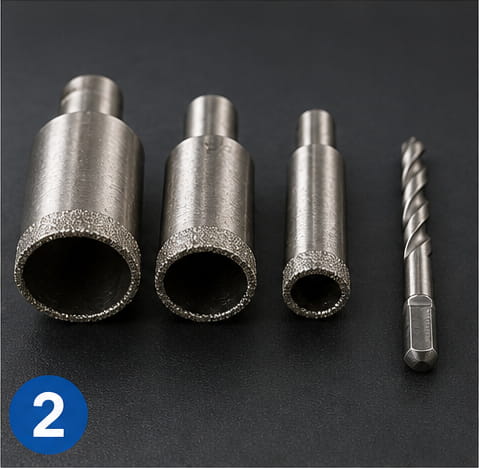
¿Brocas de acero estándar?
Olvídalo.
El imán es más duro que la broca. Lo único que conseguirás es estropear la broca y generar muchísimo calor.
En cambio, los profesionales utilizan brocas de núcleo con recubrimiento de diamante o brocas de carburo.
Paso 3: Refrigeración constante por agua
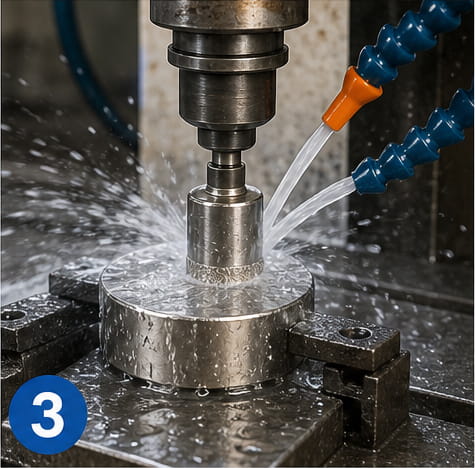
Esto no es negociable.
La zona de perforación debe ser inundado con agua o un refrigerante a base de agua. Esto tiene tres ventajas:
- Mantiene baja la temperatura (para que no se pierda el magnetismo)
- Elimina el polvo inflamable (para que no se produzca un incendio)
- Lubrica el corte (para que la broca no se atasque)
Paso 4: Remagnetizar después
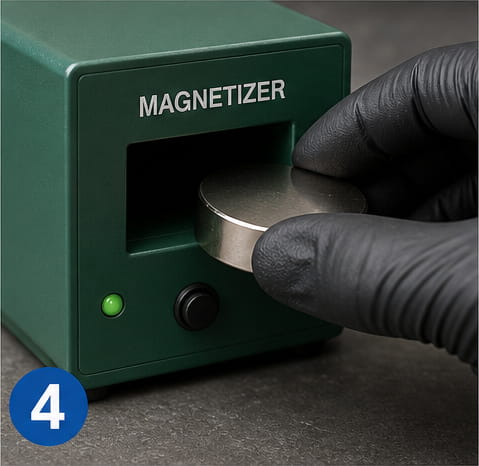
Una vez taladrado el agujero, el imán suele desmagnetizarse. Por eso, los profesionales utilizan un magnetizador para restablecer el campo magnético.
¿Ves la pauta?
Esto no es un proyecto de bricolaje para el fin de semana. Esto es fabricación industrial.
Una alternativa mucho mejor
Este es mi consejo #1:
No hagas agujeros. Simplemente compra un imán que ya tenga un agujero.
Lo sé, lo sé. Parece obvio. Pero te sorprendería saber cuánta gente no se da cuenta de que esta es una opción.
Puedes comprar fácilmente:
- Imanes de anillo (de neodimio o ferrita) con un agujero que atraviesa el centro
- Imanes para agujeros avellanados (ideal para atornillar en madera o metal)
- Imanes de vaso (carcasa metálica con un orificio roscado)
Se pueden adquirir en la mayoría de las ferreterías o por Internet a través de proveedores como K&J Magnetics, Total Element o incluso Amazon.
Son no es caro. De hecho, suelen costar más o menos lo mismo que un imán macizo. A veces, incluso menos.
¿Por qué? Porque se fabrican en serie en fábricas donde se taladran los agujeros antes magnetizar el material. Es entonces cuando resulta fácil y seguro hacerlo.
Entonces, ¿por qué te arriesgarías a romper un imán $10, provocar un incendio o perder su fuerza magnética… cuando puedes simplemente comprar el imán adecuado para $12?
No lo harías.
¿Y si pegáramos en lugar de taladrar?
Otra pregunta que me hacen a menudo:
“¿Y si simplemente pego el imán en lugar de taladrarlo?”
Buena pregunta.
¿Y, sinceramente? Lo habitual es pegarlo.
Esto es lo que funciona bien:
| Solicitud | El mejor adhesivo |
|---|---|
| Superficie metálica lisa | Cianoacrilato (superpegamento) |
| Superficie rugosa o porosa | Epoxi de dos componentes |
| Entorno de alta temperatura | Adhesivo de poliuretano |
| Plástico o caucho | Adhesivo a base de silicona |
Consejo de experto: El epoxi no se adhiere muy bien a los recubrimientos de níquel. Si vas a utilizar epoxi, lija primero la superficie del imán con papel de lija. Pero ten cuidado: recuerda que el polvo de neodimio es inflamable. Hazlo al aire libre o en un lugar bien ventilado.
Ten en cuenta también lo siguiente:
Los imanes y el metal se expanden y contraen a ritmos diferentes con los cambios de temperatura. Si tu proyecto va a estar expuesto tanto a temperaturas altas como bajas (por ejemplo, al aire libre o cerca de un motor), el pegamento puede dejar de funcionar con el tiempo.
En esos casos, un fijación mecánica (como un imán empotrado o un imán de vaso) es la mejor opción.
Cuándo puede que realmente necesites taladrar
Vale, seamos sinceros los unos con los otros.
A veces tú no puedo Compra un imán con orificios ya perforados. Quizá necesites un tamaño a medida. Quizá estés trabajando con una forma muy concreta. Quizá seas investigador o ingeniero y tengas requisitos especiales.
Si ese eres tú —y estás absolutamente, rotundamente debe Taladrar un imán de neodimio: este es mi consejo:
Contrata a un profesional.
En serio.
Busca un taller mecánico especializado en imanes de tierras raras. Disponen de las herramientas adecuadas, los sistemas de refrigeración y los protocolos de seguridad necesarios.
Sí, te costará más. Pero tu seguridad lo vale.
En resumen
Voy a terminar con una respuesta clara y sin tonterías.
Cuando alguien me pregunta:, “¿Se puede taladrar un agujero en un imán de neodimio?” Esto es lo que les digo:
Técnicamente, sí. En la práctica, no. ¿Y hacerlo uno mismo? Ni hablar.
Los riesgos son demasiado elevados:
- El imán puede romperse de forma explosiva
- El calor acabará con su magnetismo de forma definitiva
- El polvo puede incendiarse
- El metal expuesto se oxidará y se desmoronará
En su lugar, haz lo que hacen los constructores inteligentes:
- 1. Comprar imanes con orificios ya perforados (imanes de anillo, imanes avellanados o imanes de copa)
- 2. Utiliza adhesivos resistentes (cianoacrilato o epoxi) para la mayoría de las necesidades de montaje
- 3. Contrata a un profesional si necesitas a toda costa un agujero a medida
Eso es todo. Esa es la estrategia.
Ahora ve a crear algo increíble… sin prender fuego a tu taller. 🔥